Disaster Resilience Scorecard for Cities
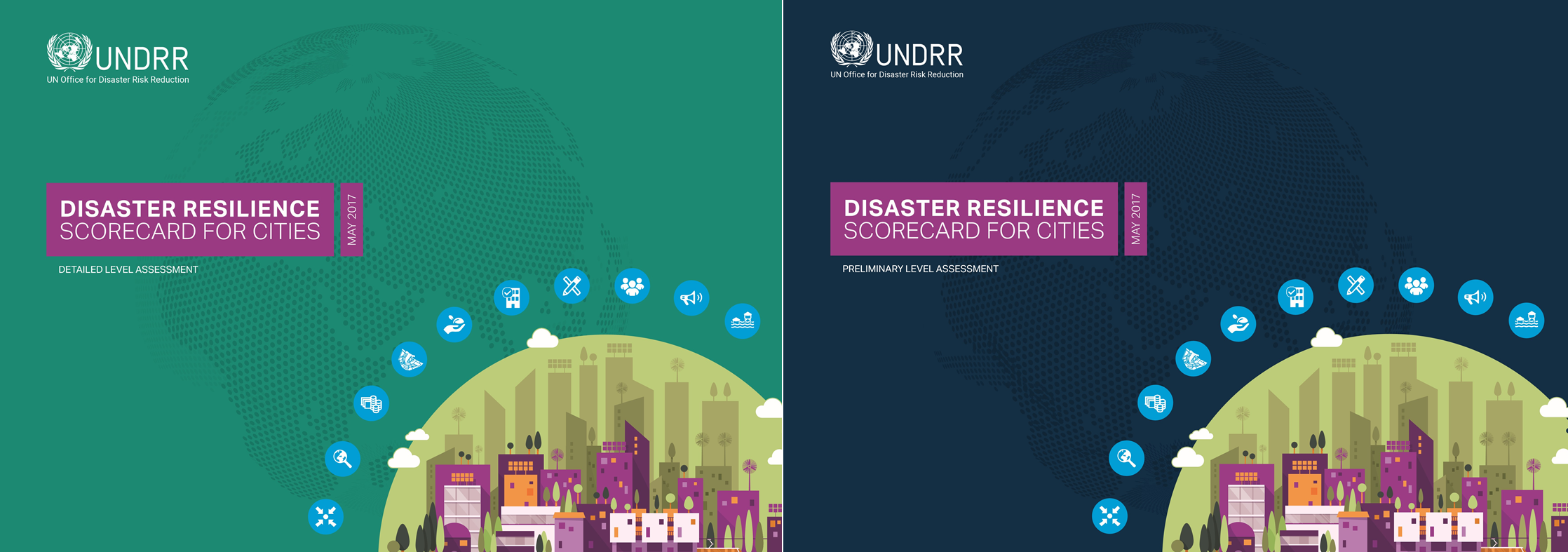
A tool for disaster resilience planning
The Disaster Resilience Scorecard for Cities or the Scorecard was published in 2017 at the Global Platform for Disaster Risk Reduction in Cancun, Mexico. It was developed by United Nations Office for Disaster Risk Reduction (UNDRR) with the support of USAID, European Commission, IBM, AECOM and other partners and cities participating in the Making Cities Resilient Campaign 2010-2020.
The Scorecard provides a set of assessments that allow local governments to assess their disaster resilience, structuring around UNDRR’s Ten Essentials for Making Cities Resilient. It also helps to monitor and review progress and challenges in the implementation of the Sendai Framework for Disaster Risk Reduction: 2015-2030 and supports the baseline analysis for preparation of the disaster risk reduction and resilience strategies.
The Scorecard offers the potential for scoring at two levels:
- Level 1: Preliminary level, responding to key Sendai Framework targets and indicators, and with some critical sub-questions. This approach is suggested for use in a 1 to 2 day city multi-stakeholder workshop. In total, there are 47 questions indicators, each with a 0–3 score;
- Level 2: Detailed assessment. This approach is a multi-stakeholder exercise that may take 1–4 months and can be a basis for a detailed city resilience action plan. The detailed assessment includes 117 indicator criteria, each with a score of 0–5.
Local authorities may consider using first the preliminary level Scorecard to initiate dialogues with the various departments and stakeholders on the issues related to disaster risk reduction and resilience. Based on the result of the preliminary scorecard assessment, local governments may consider completing the full detailed scorecard assessment or focusing on a number of key essentials that may require special attention.
While the Scorecard can be used as a standalone tool, it does require you to consider your city’s hazards and risks. Specifically, the Scorecard prompts you to identify “most probable” and “most severe” risk scenarios for each of your identified city hazards, or for a potential multi-hazard event.
In considering risk, you may find the Quick Risk Estimation tool (QRE) developed by UNDRR and Deloitte helpful.
To familiarize yourself with the information required for the assessments, please refer to the “Reference Note on required data/information: Disaster Resilience Scorecard for Cities"
The Scorecard is available in different file formats:
- The PDF version contains assessment details in a printing-friendly format.
- The excel tool is the most comprehensive version. As you conduct the assessment, you can also take note of the assessment rationale and provide proof for verification. The excel tool can produce the pictograms showing the results of analysis at the end which are highly useful for planning and decision making. It is a highly recommended version for use.
- The online version replicates the excel tool but allows multiple users to complete the assessment at the same time (Discontinued in November 2023).
Thematic Scorecard Addenda and Annexes:
- Public health scorecard addendum strengthens and integrates coverage of the many aspects of public health that are relevant to disaster planning, mitigation and response, helping to ensure of the integration of public health issues in disaster risk management.
- Food System Resilience addendum is structured in sections around the same “Ten Essentials for Making Cities Resilient” as the Scorecard. The Ten Essentials provide a holistic coverage of the many issues that affect resilience in the “system-of-systems”, which make up a system. This includes food production, supplies, transport and services.
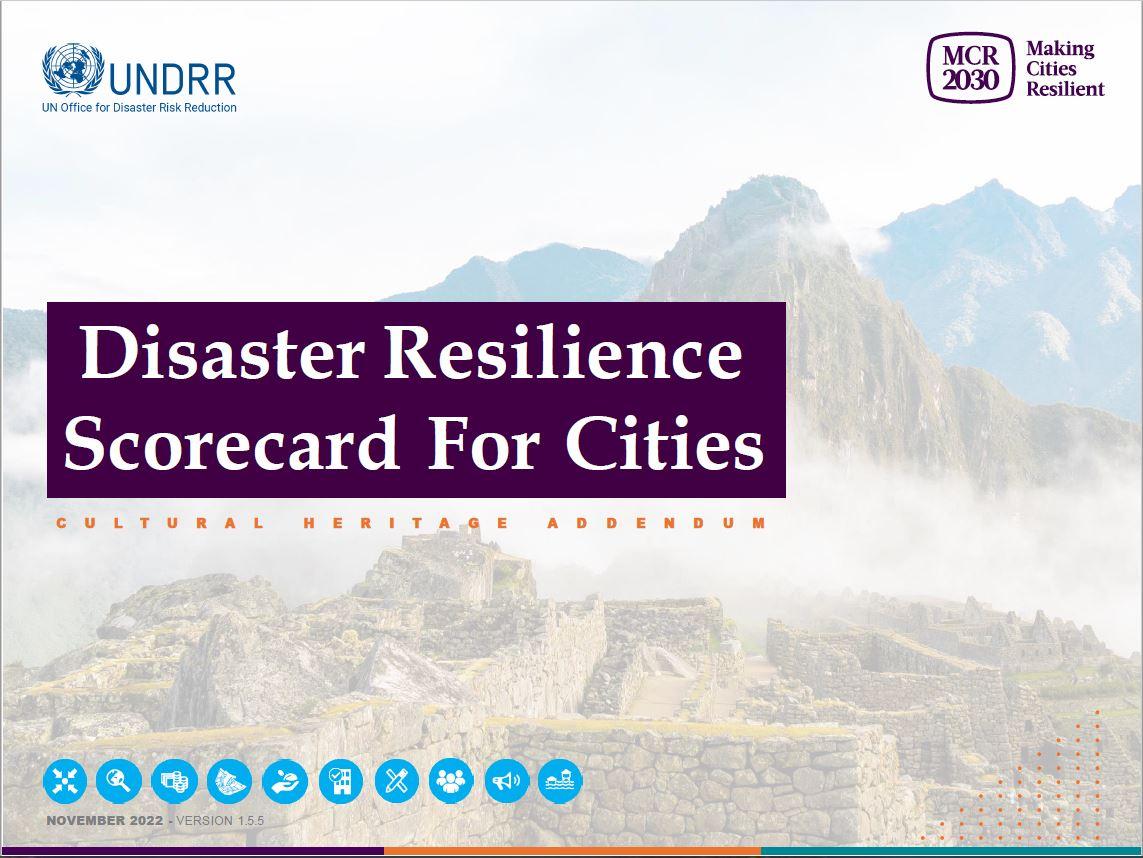
- This Cultural Heritage Addendum to the Disaster Resilience Scorecard for Cities aims to support the development of culture-based and people-centered disaster risk reduction and resilience strategies integrated with cultural heritage and development policies.
- Annex for the Inclusion of Persons with Disabilities includes specific criteria on considerations for the inclusion of persons with disabilities for each of the Ten Essentials for Making Cities Resilient. It seeks to support the formulation of local strategies and plans for enhancing more resilient and inclusive cities, together with two crosscutting principles, close consultation with and active involvement of persons with disabilities through their representative organizations and accessibility. It aims to promote inclusion and accessibility in the urban environment, so that no person with a disability be left behind.
- The Climate Resilience Addendum allows users to self-assess the interlinkage and integration of disaster risk reduction and climate change adaptation at the sub-national government level strategies and practices. Originally developed in Spanish through a collaboration of the Development Bank of Latin America and the Caribbean (CAF) and UNDRR, this version integrates feedback from city pilots and consultative review.
- The Scorecard Addendum for Gender Equality and Intersectionality aims to incorporate a gender perspective into disaster risk reduction, acknowledging and addressing the gender-specific impacts of disasters and needs in resilience-building. Adopting an intersectional and human-rights-based approach, it looks towards recognition, autonomy and empowerment as an integral part of the development of local resilience strategies, with a view to strengthening cities that are increasingly resilient and inclusive. It includes specific criteria on considerations for the leadership and participation of women and people with diverse sexual orientation, gender identity, gender expression and sex characteristics (SOGIESC) for each of the Ten Essentials for Making Cities Resilient.

- The Disaster Displacement Addendum is a self-assessment tool that supports local governments to design, formulate and implement policies to include displaced persons in disaster risk reduction efforts. The Addendum was developed collaboratively by the Norwegian Refugee Council, UNDRR, IOM, IDMC and PDD in consultation with multiple stakeholders, and has been tested in multi-stakeholder workshops in several countries.
- The Multi-Hazard Early Warning Systems Addendum (MHEWS Addendum) is a self-assessment tool that supports local governments and other users, such as humanitarian actors, to comprehensively assess the status, advancements, and gaps of multi-hazard early warning systems at the local level and to improve planning processes to design and implement effective MHEWS. The questions are aligned with the Ten Essentials for Making Cities Resilient and build upon the MHEWS Checklist developed by the International Network for MHEWS (IN-MHEWS). The Addendum was developed by the UNDRR Regional Office for the Americas and the Caribbean in collaboration with IFRC.
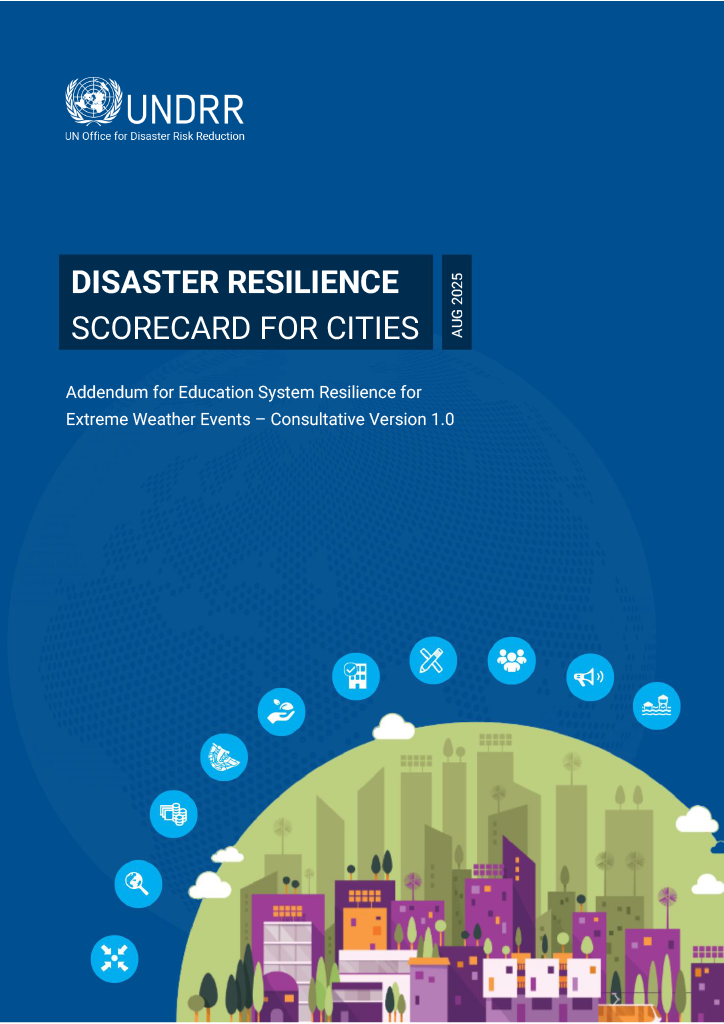
- The Scorecard Addendum for Education System Resilience for Extreme Weather Events is a self-assessment tool that supports local governments to identify, evaluate and recommend priority actions and policies that contribute to strengthening the resilience of the education system to weather extremes and disasters. The Addendum was developed collaboratively by Belmont University, the Aga Khan Foundation and Aga Khan University, Restless Development, Creative Action Institute and UNDRR in consultation with multiple experts and stakeholders. It was piloted in four workshops across Tanzania.
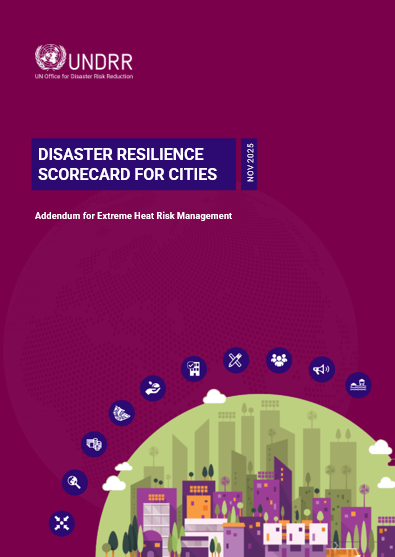
- The Scorecard Addendum for Extreme Heat Risk Management is a self-assessment tool supporting sub-national and local government officials, planners, and stakeholders to identify gaps, set priorities, and track progress in building extreme heat resilience. It focuses on practical actions that reduce heat exposure, protect people, and integrate heat risk into long-term planning and investment decisions. This addendum was developed by UNDRR with valuable contributions from peer-reviewers, and through pilot applications with local authorities, national governments and partner institutions from over 15 countries.
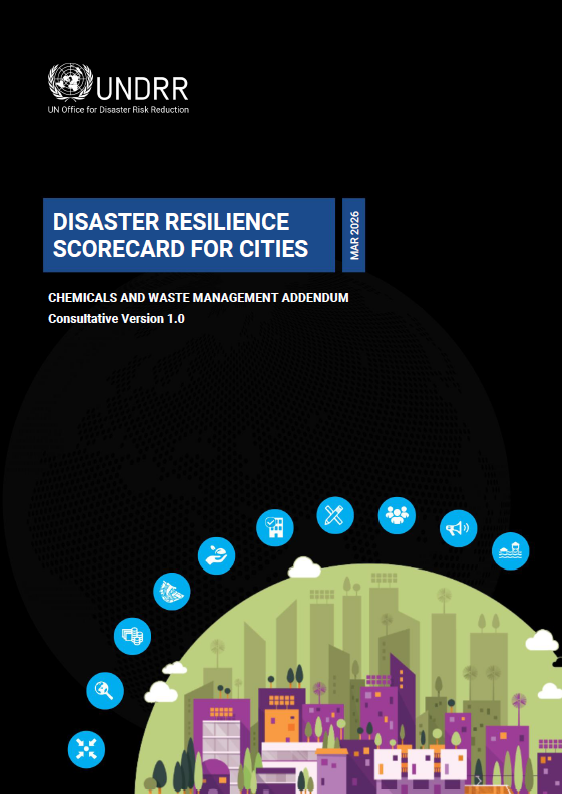
- The Chemicals and Waste Management Scorecard Addendum is a self-assessment tool designed to strengthen the integration of the environmentally sound management of chemicals and waste into disaster risk reduction and management. This integration relies on close coordination between actors across the chemicals and waste lifecycle—manufacturers, regulators, waste handlers, and environmental agencies—and disaster risk managers, emergency responders, urban planners, and public health authorities. Effective collaboration among these groups enables early identification of risks, enhanced preparedness for chemical and waste emergencies, and rapid, well-coordinated responses that protect communities, critical infrastructure, and ecosystems when disasters occur. The addendum contains 26 indicators, each scorecard from 0 to 5, with 5 representing best practice.
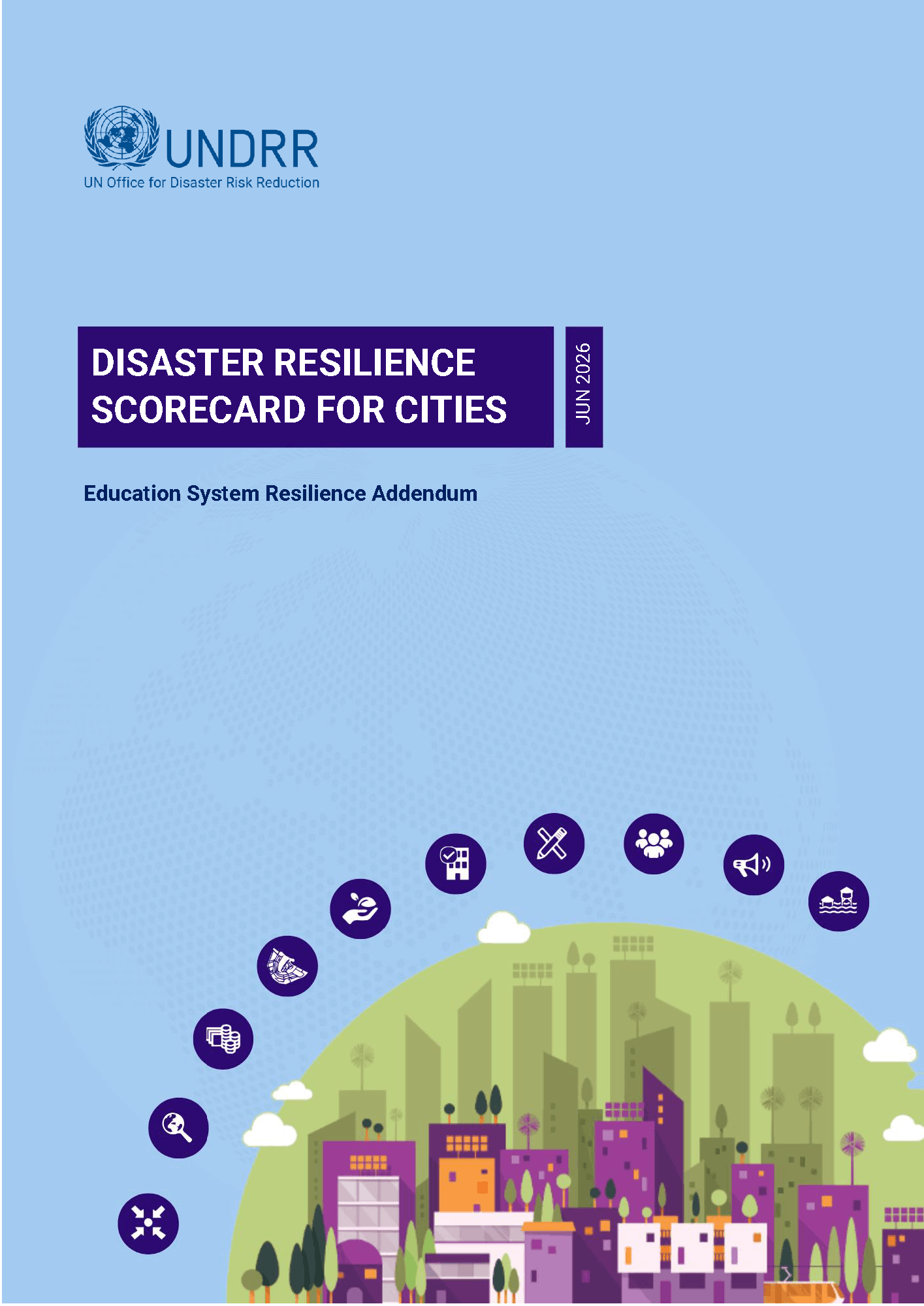
- The Education System Resilience Scorecard Addendum provides a set of assessments that enable local governments, together with education authorities (EAs) primarily at the sub-national level and within the broader city or municipal system, to assess the resilience of the city’s education system to disasters. Building upon early inputs from IBM and Bechtel, and complemented by peer-review feedback through the Global Alliance for Disaster Risk Reduction and Resilience in the Education Sector (GADRRRES), it follows the same structure as the Disaster Resilience Scorecard for Cities, is aligned with the Ten Essentials for Making Cities Resilient, and complements the Comprehensive School Safety Framework (CSSF) Targets and Indicators 2022-2030. The Scorecard includes a total of 42 indicators, each of which includes guiding questions, explanatory comments, evidence requirements, and a scoring system to support structured assessment and discussion. Each indicator is scored on a scale from 0 to 5, with higher scores representing stronger levels of implementation progress.
Other Scorecards by ARISE – the UN Private Sector Alliance for Disaster Resilience Society
- Disaster Resilience Scorecard for Industrial and Commercial Buildings (Building Scorecard)enables the establishment of a baseline for the resilience of buildings and campuses to natural or man-made disasters, so allowing improvements to be identified and prioritized. It is intended for use by the owners, managers and operators of commercial, industrial and multi-residential buildings or campuses, both government and privately-owned. The Building Scorecard has been created by a team of volunteers led by ARISE - the UN Private Sector Alliance for Disaster Resilient Societies.
- The Wildfire Disaster Risk Reduction scorecard is designed to help communities improve their ability to assess the risk from, prepare for, manage and recover from wildfires. It is modeled on UNDRR Disaster Resilience Scorecard for Cities and embodies the Ten Essentials of Making Cities Resilient. Developed by ARISE-US and CrowdDoing. The Wildfire Scorecard is issued with a spreadsheet to help with capturing scores.
- SME Scorecard - Micro, Small-to-medium sized enterprises (hereafter “SMEs”) are not adequately addressed in any of the current scorecards, including the UNDRR’s Disaster Resilience Scorecard for Cities. Most existing matrices that track private sector interactions typically merge large companies as well as SMEs as they evaluate and catalogue existing frameworks, especially public/private partnerships. This scorecard seeks to help cities create a clear evaluative mechanism to distinguish SME interaction with existing public sector disaster and emergency management agencies from private sector interactions generally (which may include SME as well as large companies). The Addendum can be used in conjunction with the UNDRR Scorecard or as a standalone. This scorecard is fast, taking only 15 minutes at the very most, and all questions are yes/no to make for quick and easy evaluation.
- Coastal Resilience Scorecard is a first-of-its-kind tool designed to help coastal cities and settlements worldwide to identify vulnerabilities and strengthen their coastal disaster risk reduction to enhance coastal resilience against sea-level rise, storms, and other coastal hazards. Led by the Waterfront Alliance and ARISE-US, the team created a comprehensive assessment tool to help cities evaluate their readiness for both acute coastal disasters and chronic stresses affecting coastal zones and beyond. Launched at the Sustainable Ocean Summit 2025 alongside the Tomorrow Blue Economy Expo in Barcelona, Spain, this Scorecard comes with a User Guide and Self-Scoring Tool (short- and long-forms).
Other Scorecards by CDRI – Coalition for Disaster Resilient Infrastructure
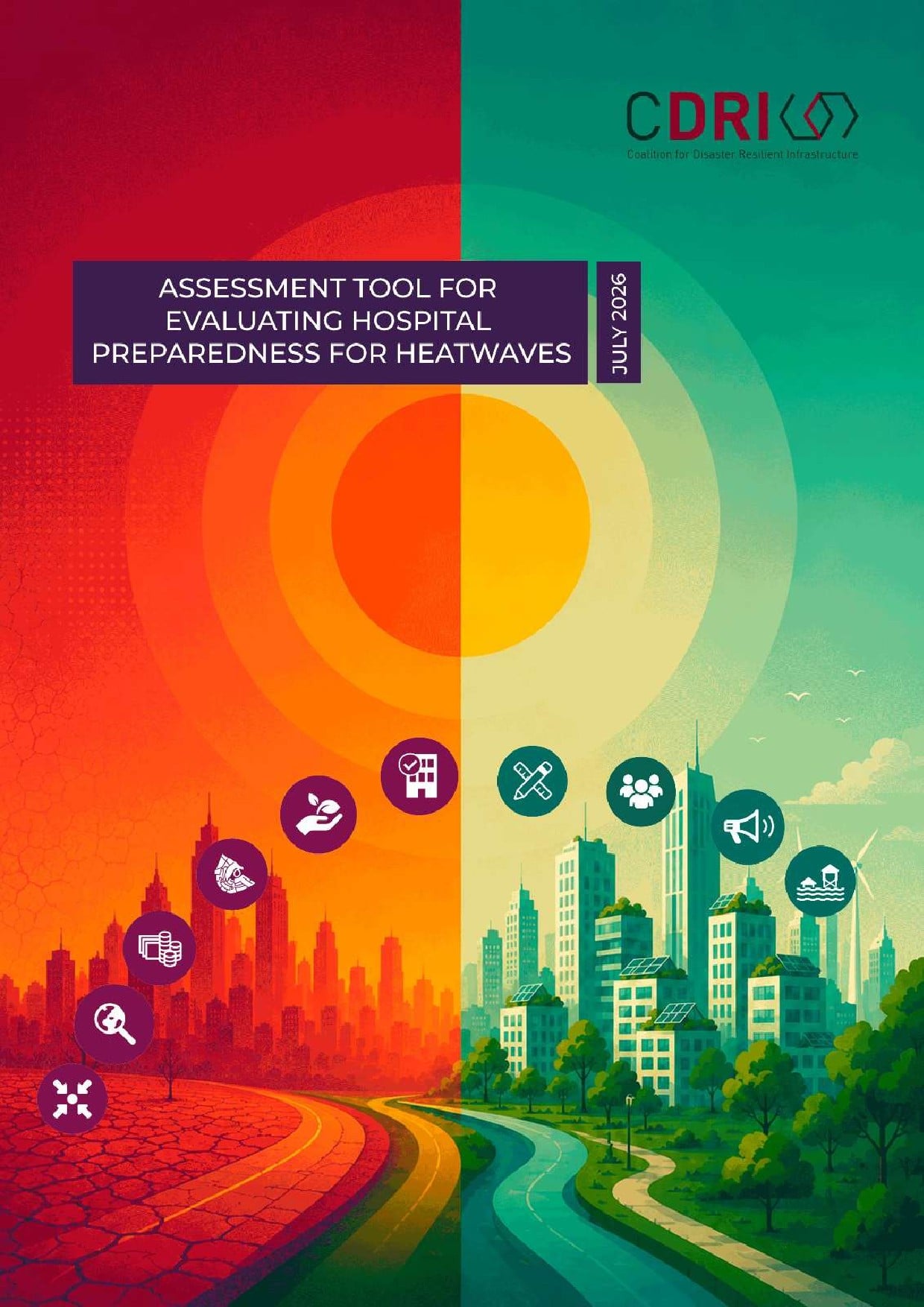
- Assessment Tool for Hospital Preparedness for Heatwaves (ATHP-HW) provides a structured framework for evaluating hospital readiness for heatwaves. Its aims are to help hospitals identify strengths and gaps in preparedness, prioritize improvement actions, support institutional planning and decision-making, and strengthen health system resilience to extreme heat. It consists of 24 indicators organized under the Ten Essentials for Heat Resilience, each scored on a six-point scale (0–5) representing progressively increasing levels of preparedness, and is intended to be completed through a multidisciplinary institutional assessment involving hospital leadership alongside relevant clinical, technical, and administrative departments. Rather than serving as an accreditation instrument, the ATHP-HW is designed as a self-assessment and continuous quality improvement tool, enabling hospitals to monitor preparedness over time, identify priority areas for action, strengthen institutional learning, and support evidence-informed planning for future heatwave events.
More information
- Reflections from Cities on the use of the Scorecard and Resilience Planning
- Report on “Making Cities Sustainable and Resilient: Lessons learned from the Disaster Resilience Scorecard assessment and Disaster Risk Reduction (DRR) action planning”
- Case studies and lessons learned from North Macedonia, Romania, and Serbia
- Chisinau Disaster Resilience and Public Health System Resilience Assessment Report: Disaster Resilience Scorecard Assessment Results
Download the Scorecard
Download the Scorecard in PDF or Excel tool format, available in various languages below:
English
- Preliminary Assessment (PDF)
- Preliminary Assessment - Accessible (PDF)
- Detailed Assessment (PDF)
- Preliminary Assessment Excel Tool
- Detailed Assessment Excel Tool
- Reference Note - Preliminary Assessment
- Reference Note - Detailed Assessment
Albanian
Arabic
- Preliminary Assessment (PDF)
- Detailed Assessment (PDF)
- Preliminary Assessment Excel Tool
- Detailed Assessment Excel Tool
Bengali
Bosnian
- Preliminary Assessment (PDF)
- Detailed Assessment (PDF)
- Preliminary Assessment Excel Tool
- Detailed Assessment Excel Tool
Burmese
Chinese
Farsi
French
- Preliminary Assessment (PDF)
- Detailed Assessment (PDF)
- Preliminary Assessment Excel Tool
- Detailed Assessment Excel Tool
German
Italian
Indonesian (Bahasa)
- Detailed Assessment (PDF)
- Detailed Assessment Excel Tool
- Preliminary and Detailed Assessment (PDF)
- Preliminary Assessment Excel Tool
Korean
Mongolian
Nepali
Polish
Portuguese
- Preliminary Assessment (PDF)
- Detailed Assessment (PDF)
- Preliminary Assessment Excel Tool
- Detailed Assessment Excel Tool
- Preliminary Assessment Excel Tool (Portuguese BR)
- Detailed Assessment Excel Tool (Portuguese BR)
Romanian
- Preliminary Assessment (PDF)
- Detailed Assessment (PDF)
- Preliminary Assessment Excel Tool
- Detailed Assessment Excel Tool
Russian
- Preliminary Assessment Excel Tool
- Detailed Assessment Excel Tool
- Reference Note - Preliminary Assessment
- Reference Note - Detailed Assessment
Serbian
- Preliminary Assessment (PDF)
- Detailed Assessment (PDF)
- Preliminary Assessment Excel Tool
- Detailed Assessment Excel Tool
Spanish
- Preliminary Assessment (PDF)
- Detailed Assessment (PDF)
- Preliminary Assessment Excel Tool
- Detailed Assessment Excel Tool