
Building resilience through youth innovation and local wisdom in Thailand
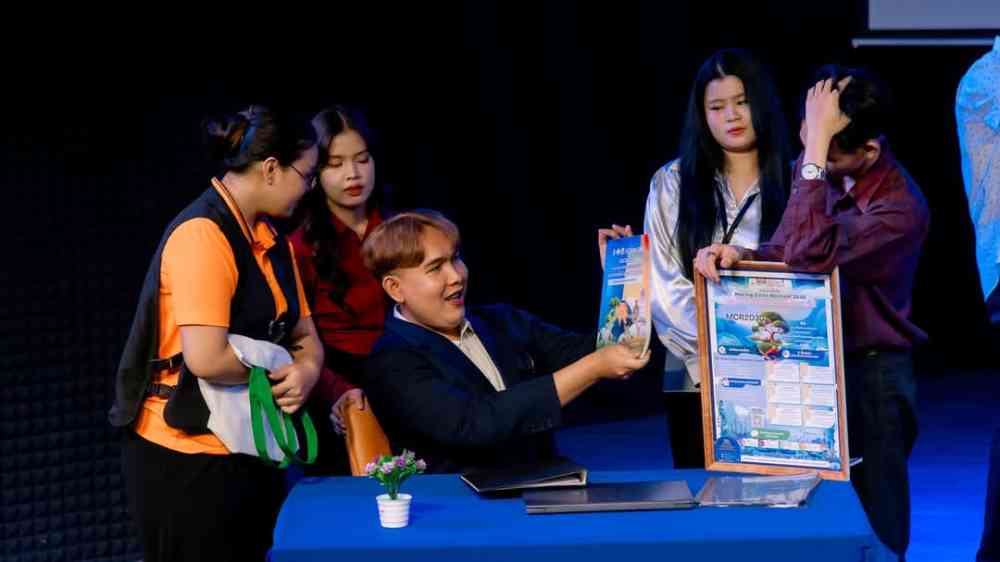
Scene from the interactive role play “ก้าวสู่เมืองรีซิเลียนซ์” (Steps to a Resilient City), where participants explored the key elements of urban resilience through dynamic and engaging storytelling
Mahasarakham Municipality, in collaboration with Mahasarakham University, is showing how local governments can lead the way in building urban resilience – by engaging communities, embracing creativity and drawing on local knowledge. As part of the Making Cities Resilient 2030 (MCR2030) initiative, led by the United Nations Office for Disaster Risk Reduction (UNDRR), the city in Thailand’s Northeast is using the Disaster Resilience Scorecard for Cities to guide a collaborative approach to disaster resilience.
From self-assessment to community ownership
In 2023, the municipality launched its Scorecard assessment, examining resilience across the Ten Essentials for Making City Resilient. The initial workshop brought together diverse stakeholders – community groups, local authorities, health volunteers, and neighborhood leaders – who had never before been involved in disaster risk planning. This inclusive process helped the city map out its strengths and identify where improvements were needed. It also sparked a shift – from technical assessment to shared ownership of resilience.
One key partner in this journey was the Climate Change Mitigation and Adaptation Research Unit (CMARE) of Mahasarakham University. Faculty and students from a range of departments contributed their expertise and, just as importantly, helped find creative ways to make resilience concepts more accessible – especially for vulnerable group in rural area.
Art, song, and role play: Youth as risk communicators
Recognizing that conventional disaster education often does not reach everyone – especially older persons, farmers, women, person with disabilities, and youth – the university worked with young people to co-created new, culturally grounded tools for public outreach.
These included a role play and two original songs:
- “เสียงจากวันพรุ่งนี้” (The Echoes from Tomorrow, translated from Thai) is a modern, emotionally powerful song calling for urgent action and community preparedness in the face of climate-related disasters.
- “ลำเพลินภัยพิบัติ” (Disaster Lam Plearn), is a traditional Isaan-style folk performance, known for its lively and rhythmic melodies. The city adapted this familiar musical form in local language to deliver messages on environmental degradation, disaster preparedness, and shared community responsibility.
These songs, alongside an interactive role play titled “ก้าวสู่เมืองรีซิเลียนซ์” (Steps to a Resilient City) invite dialogue. People are not just passive recipients of information – they are active participants, sharing feedback and drawing from local wisdom and oral history.
Turning collaboration for resilience into a system
The creative outreach efforts fed into a broader strategic process. A localized SWOT analysis (strategic planning framework) helped the municipality identify opportunities and challenges in areas like risk mapping, water and waste management, health infrastructure, and early warning systems. These insights have now beenembedded in the city’s development strategy. A municipality steering committee, supported by university mentors, oversees implementation and ensures that resilience planning remains dynamic and responsive. Today, the municipality together with CMARE of Mahasarakham University continues to monitor its progress using the MCR2030 Scorecard and has embraced a continuous learning approach – captured in a line from their role play: “We cannot stop developing, because global warming is changing the risks we face every day. What was once enough, may no longer be.”
A model for other cities
Mahasarakham's story under MCR2030 offers a compelling example of what is possible when local collaboration is rooted in creativity, inclusion, and shared purpose. The partnership between the municipality and the university shows how technical expertise can be combined with cultural knowledge and youth energy to build a more resilient future
“Working with UNDRR has inspired the National Research Council of Thailand to bring global knowledge into local action – connecting community participation with local policies as a foundation for resilience and sustainable development”, said Assoc. Prof. Piyapatr Busababodhin, Ph.D., Assistant to the President for Data-Driven Management for Development at Mahasarakham University.
By making resilience planning participatory and locally relevant, Mahasarakham has strengthened not only its systems but also its community bonds. As one student said, “We can’t wait for someone else to fix the future. We have to shape it ourselves.”