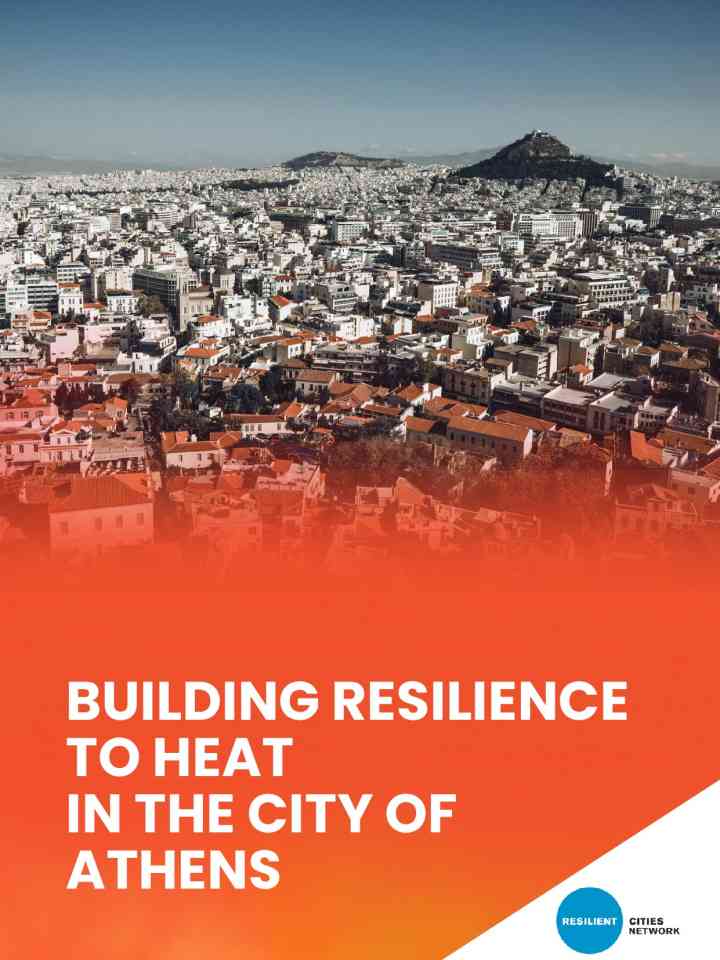
Building resilience to heat in the city of Athens
Source
This report brings together, for the first time, the diverse evidence on how Athens is managing and adapting to extreme heat. Although Athens is widely recognised as a global pioneer in urban heat resilience, much of the knowledge has until now been dispersed across technical studies and local initiatives. Developed within the EU-funded ARSINOE programme, the report consolidates these insights into a coherent, practice-oriented narrative-highlighting both achievements and lessons for future planning. It offers a grounded view of how governance, innovation, and collaboration are shaping the city's response to rising temperatures.
Key lessons for Athens and peer cities:
- Mandates matter. A charismatic Heat Officer can open doors, but enduring impact requires clear legal authority and a stable budget line.
- Data need legitimacy. Dashboards become action-forcing only when co-created with frontline agencies and neighbourhood groups; this builds ownership and early-warning response skills.
- Green and blue infrastructure must be treated as critical infrastructure. Shade canopies, pocket parks, and water- sensitive design cool streets, cut energy peaks, and offer social refuge-benefits no substation or HVAC unit can deliver alone.
- Equity is both a moral and operational imperative. Targeting retrofits, subsidies, and outreach to low-income renters, older adults, and informal workers not only saves lives but also reduces health-care surges and productivity losses that ripple across the city economy.
- Systems innovation thrives on networks. Athens' alignment with global alliances-R-Cities, Atlantic Council's Extreme Heat Resilience Alliance, C40 Cities, the EU Mission on Adaptation, and others-accelerates learning, funding, and political momentum.
Explore further
Hazards
Heatwave and Extreme Heat
Themes
Urban risk and planning
Country and region
Greece