
Strengthening collaboration for urban resilience in Serbia

On 2–3 June 2026, representatives from 27 MCR2030 member cities and municipalities in Serbia gathered for the first MCR2030 Annual Meeting in Serbia.
Organized under the Resilience Western Balkans initiative, funded by the Italian Agency for Development Cooperation (AICS) and implemented by UNDRR, the meeting also benefited from the support of UNDP Serbia.
The meeting brought together more than 40 participants, including representatives from the Embassy of Italy in Serbia and the Ministry of Interior of Serbia.
Mr. Niccolo Rossi, First Secretary and Head of the Economic and Commerce Office of the Embassy of Italy to the Republic of Serbia, said,
“Italy has invested EUR 4 million in strengthening disaster resilience across the Western Balkans because we believe that safer and more resilient communities are fundamental to sustainable development and regional stability. We are proud to support the country’s efforts to strengthen disaster risk management capacities and advance towards European standards. These investments are not only about reducing risks, they are about protecting people, supporting Serbia’s European path, and building a safer future for generations to come.”

Mr. Ivan Baras, Assistant Head of the Sector for Emergency Management at the Ministry of Interior, thanked the Italian government and UNDRR for their investments in building resilience in Serbia. Mr. Baras emphasised that
“Building resilience is no longer a choice but a necessity. Through the MCR2030 initiative, Serbian cities and municipalities are strengthening their capacities to prevent, prepare for, and respond to increasingly complex disaster risks. The continued growth of the MCR2030 network in Serbia demonstrates a strong commitment by local governments to invest in safer, more resilient, and sustainable communities. By working together and learning from one another, we can better protect our citizens and ensure that no community faces these challenges alone."
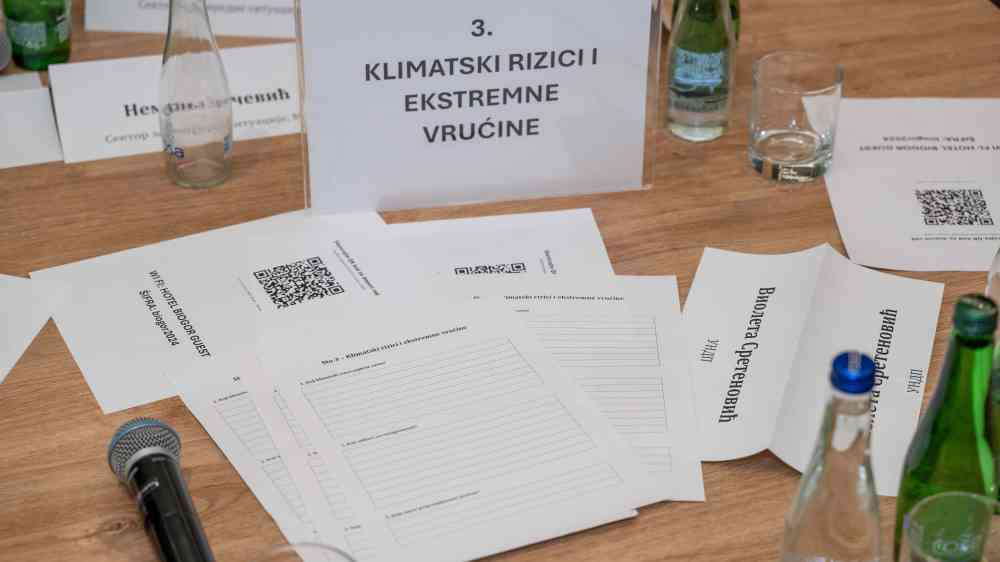
The meeting provided a valuable opportunity for cities and municipalities to exchange experiences and discuss common challenges related to disaster risk reduction and urban resilience. Discussions covered a wide range of issues, including heatwaves, forest fires, water supply, energy, public health, early warning systems, and tourism.
Despite the diversity of local contexts, participants repeatedly highlighted two common challenges: limited human resources and a lack of opportunities for regular exchange and collaboration. These constraints often make it difficult for local governments to address complex, cross-cutting resilience issues in an integrated way, leading to siloed approaches and missed opportunities for coordination.

Recognizing the value of peer learning and collaboration, four cities volunteered to form a working group that will continue working together on these shared challenges and identify practical solutions that can benefit cities across Serbia. Mr. Zarko Petrovic, Team Leader of Resilient Development, UNDP Serbia, underscored,
“Climate change is unfolding faster than expected, and its impacts are felt first and foremost at the local level. By investing in disaster risk reduction, preparedness and resilience today, we can protect lives, safeguard development gains and reduce future losses. The strong engagement of Serbian cities and municipalities in the MCR2030 initiative sends a clear message: resilience is becoming a central pillar of local development.”
The meeting also marked an important step for the future of the MCR2030 network in Serbia. Through a transparent process, participating cities recommended Novi Pazar as the city best positioned to become a national MCR2030 Resilience Hub. The city expressed its appreciation for the trust placed in it and its commitment to submit an application to become an official MCR2030 Resilience Hub in the near future.
This first annual gathering demonstrated the strength of the growing MCR2030 network in Serbia: cities learning from one another, identifying shared priorities, and building partnerships to advance resilience together. With 31 cities and municipalities currently participating in MCR2030, the annual meeting marked an important step towards strengthening the national network and fostering sustained collaboration among local governments across the country.