
Portugal's resilient cities network gathers in the Azores for 14th edition of the national meeting
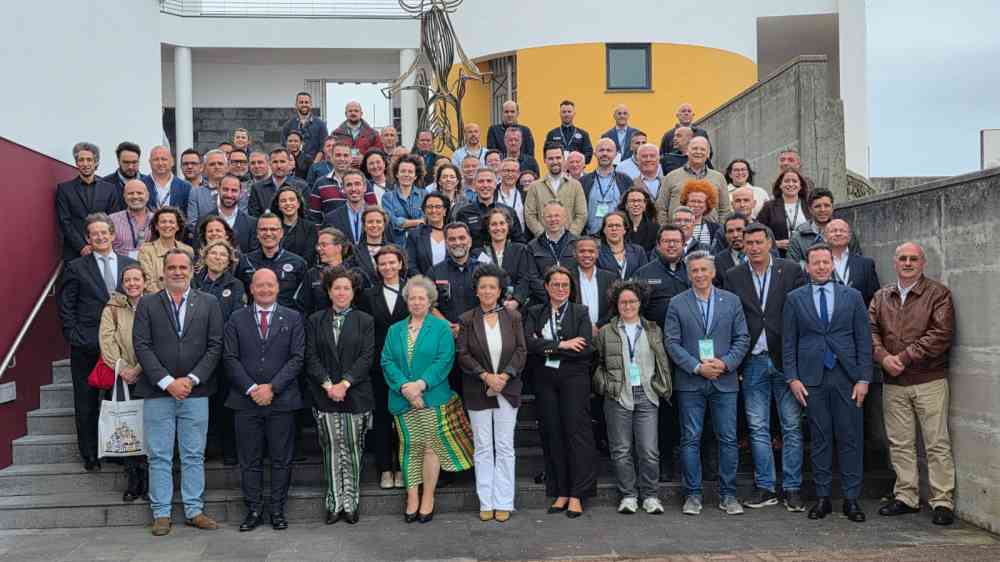
From 20 to 22 May 2026, the Municipality of Angra do Heroísmo hosted the 14th edition of the Portuguese National Meeting of Resilient Cities and Towns (Encontro Nacional | Cidades e Vilas Resilientes), with support from the Making Cities Resilient 2030 (MCR2030) initiative. Held at the Centro Cultural e de Congressos de Angra do Heroísmo, the three-day gathering brought together local authorities, civil protection professionals, academic experts, and international partners to exchange knowledge and reinforce collective commitment to urban resilience.
The programme spanned thematic panels, roundtable discussions, technical presentations, and a field visit to the Algar do Carvão volcanic cave, a fitting setting for a meeting that placed seismic and volcanic risk at the centre of the conversation. Topics addressed over the three days included:
- Governance and response to extreme climate events
- Civil protection and territorial resilience: prevention, response and recovery
- The legacy of the 1980 Azores earthquake: memory, reconstruction, and resilience
- International cooperation for urban resilience
- Best practices in local resilience from municipalities across Portugal
One of the highlights of the opening session was the certificate ceremony, during which several new Portuguese cities were officially welcomed into the MCR2030 network. The diplomas were awarded in the presence of the UN representative, reflecting the continued growth of Portugal's engagement with the initiative. Portugal stands today as the largest and most active national network within MCR2030 in Europe and Central Asia, with 92 member cities out of 243 across the region. The country is also home to three MCR2030 Resilience Hubs, Amadora, Matosinhos, and Funchal, making Portugal a reference point for the entire region.
Azores as a living laboratory for resilience
The choice of Angra do Heroísmo as the host city was itself a powerful statement. The city, which was largely rebuilt following a devastating earthquake in 1980, carries deep institutional memory of disaster and recovery, a knowledge the MCR2030 network recognised as directly relevant to peer learning.
“A devastating earthquake that caused destruction, suffering, and deep scars on our island. But it was precisely in that context of great adversity that Angra do Heroísmo showed the world its capacity for resilience, recovery, and the preservation of its historical and cultural heritage”
President Fátima Amorim, Mayor of Angra do Heroísmo
City-to-city exchange: Portugal and Timor-Leste
A distinctive feature of this year's edition was the participation of an international delegation from Timor-Leste, comprising representatives of the City of Dili and the National Civil Protection Authority, with the support of the UNDRR Regional Office for Asia Pacific. Their presence went beyond the role of observers: the visit was conceived as a genuine city-to-city exchange, one grounded in shared language and cultural ties, on top of comparable territorial challenges and risk landscapes. This cross-regional exchange offered Portuguese municipalities the opportunity to share their experience integrating civil protection with longer-term DRR planning and the Timorese delegation to share their perspective on community-level preparedness and building resilience from the ground up.
“These meetings allow us to grow nationally through the exchange of best practices, and with the increasing participation of Portuguese cities in MCR2030, the potential for growth also increases. Adding the international aspect with the participation of colleagues from Timor-Leste has made this sharing much more interesting and promising for future work”.
Susana Goncalves, Civil Protection Director of Matosinhos and co-chair of the coordinating committee of the MCR2030 initiative
The International Panel on 22 May featured presentations from the City of Mumbai and a KPMG consultant, situating the Portuguese experience within a broader global conversation on urban resilience cooperation.
Reaffirming Portugal's Commitment to Local Resilience
The 14th National Meeting once again reaffirmed the commitment of Portuguese cities and towns to building safer, more resilient communities through knowledge-sharing, peer exchange, and collective action. It highlighted Portugal's continued alignment of local resilience strategies with the Sendai Framework for Disaster Risk Reduction 2015–2030 and the 2030 Agenda for Sustainable Development - with the clock ticking toward the final years of both frameworks.
"As we approach 2030, the window for meaningful progress on the Sendai Framework is narrowing. Every euro invested in disaster risk reduction saves between 4 and 15 in response and recovery".
Antonia Vignolo, Programme Management Associate Officer, UNDRR Regional Office for Europe and Central Asia
The meeting was organised with the support of the Serviço Municipal de Proteção Civil de Angra do Heroísmo and took place under the auspices of the MCR2030 initiative, the global partnership led by UNDRR to support and monitor the commitment of local governments to become more resilient to disasters.