Advancing Urban Resilience in Uganda

Uganda is recurrently affected by a range of natural hazards, including floods, landslides, droughts, epidemics, and urban fires. Flooding remains the most frequent hazard, particularly affecting low-lying urban areas along major river basins. In addition to climate variability, the fast rate of urban developments in Uganda leads to the expansion of informal settlements, heightened pressure on infrastructure and services, and greater vulnerability to these hazards.
Against this backdrop, the United Nations Office for Disaster Risk Reduction (UNDRR) provided technical assistance to co-implement activities for the strengthening of local capacities. In February 2026, UNDRR convened Ugandan stakeholders at both the local and national levels to strengthen disaster resilience and climate change adaptation through the Making Cities Resilient 2030 (MCR2030) initiative. The activities were organised by UNDRR with funding from the Deutsche Gesellschaft für Internationale Zusammenarbeit (GIZ) under the Resilience Initiative Africa project.
From 16–18 February 2026, UNDRR co-organised a sub-national assessment activity in Entebbe, Uganda, alongside the Office of the Prime Minister and the Ministry of Lands, Housing and Urban Development. Following this work at the sub-national level, a national workshop was convened from 19—20 February 2026 in Kampala. This national workshop used the results of the gap analysis assessment at the sub-national level to inform strategic actions at the national level.
The subnational work in Entebbe focused on the practical application of the Disaster Resilience Scorecard for Cities, which provides a comprehensive framework for measuring resilience across governance, infrastructure, finance, and community engagement. It highlights strengths and weaknesses while guiding municipalities to set priorities and develop actionable strategies for improvement.
UNDRR showcased how the MCR2030 initiative is instrumental for developing risk-informed planning strategies, outlining clear steps for Uganda to use the results from the Scorecard application.
Disasters happen locally, and it is local governments that are called upon first. Through Making Cities Resilient 2030, we aim to support municipalities to assess their gaps, build capacity, and develop practical, financeable resilience plans aligned with the Sendai Framework.
- Carolyne Mengich, UNDRR Regional Office for Africa
Directly following the work at sub-national level, the National-Level Workshop on MCR2030 convened in Kampala, bringing together 60 participants from government ministries, national agencies, local governments, development partners, UN agencies, academia, and civil society. These stakeholders aimed to strengthen strategic leadership, policy coherence, and coordination mechanisms that support local governments in building resilience.
Building on the findings from the Scorecard assessment completed in Entebbe, this national workshop used key findings from the scorecard assessment to inform national dialogue and the development of agreed strategic actions. These actions were focused around strengthening coordination between local and national institutions for DRR, improving national leadership while simultaneously strengthening local resilience, and supporting the local level implementation of resilience.
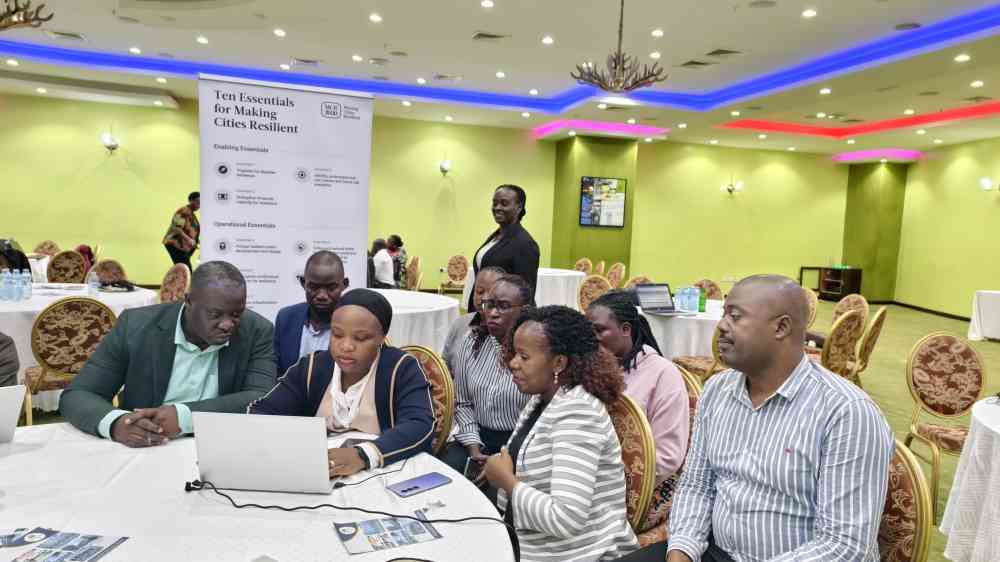
At the end of both workshops, participants left with a deeper understanding of how the MCR2030 initiative can strengthen local resilience, and national ministries and agencies committed to closer collaboration in supporting municipalities. Clear strategic directions and priority actions were agreed upon, aligning national disaster risk reduction and climate adaptation frameworks with local implementation needs. Importantly, Kampala Capital City Authority was formally recognized as an MCR2030 Resilience Hub, positioning Uganda as a leader in advancing sub-national resilience across the region. Altogether, these outcomes reflect a shared determination to protect lives, empower communities, and ensure that urban resilience becomes a cornerstone of Uganda’s future DDR commitments.
Uganda is urbanizing rapidly, at over 5 percent annually, and this growth is taking place in a changing climate. Planning without considering risk is no longer an option. We must integrate disaster and climate risk into land use, infrastructure design, and urban development decisions.
- Ms. Martha Mugarura, Ass. Commissioner, Ministry of Lands, Housing and Urban Development