Localization Spotlighted at the 8th Global Platform for Disaster Risk Reduction
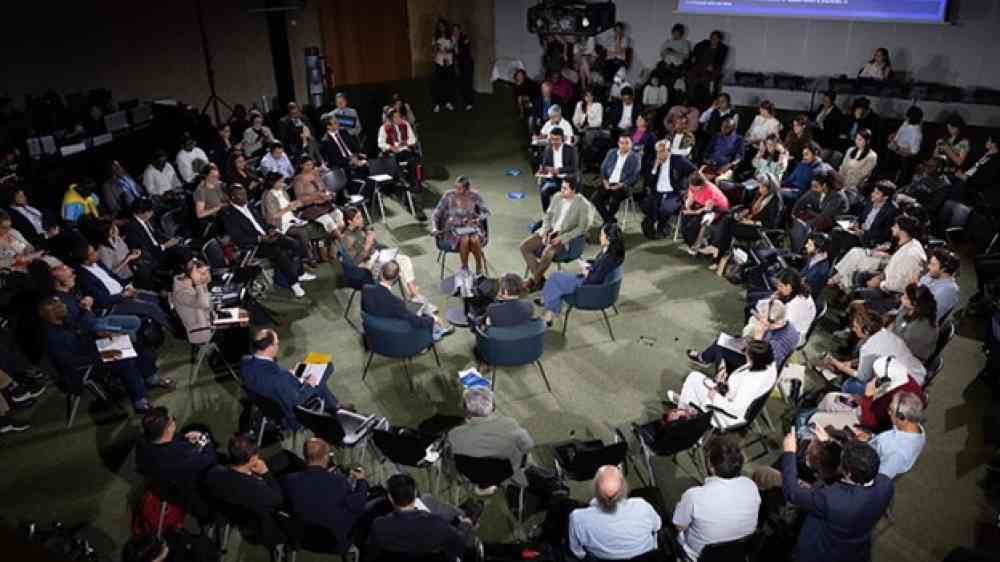
Localization took center stage at the 8th Global Platform for Disaster Risk Reduction (GP2025), where over 3,000 participants from 164 countries gathered under the theme “Every Day Counts: Act for Resilience Today.” Local and regional governments, development partners, and stakeholders from all sectors convened to accelerate progress on the Sendai Framework for Disaster Risk Reduction, with a clear recognition that resilient communities are built from the ground up.
Throughout the five-day event, held from 2–6 June in Geneva, Switzerland, sessions emphasized the vital role of local and regional governments in managing disaster risk and driving inclusive resilience. Participants shared good practices, local innovations, and institutional challenges, with localization emerging as a cross-cutting priority across technical sessions, learning labs, and stakeholder engagements. The message from Geneva was clear: localization is indispensable to delivering the Framework’s targets by 2030.
As noted in the official Co-Chairs’ Summary, “local actors and communities are inspiring the world with examples of how they are managing risks,” reflecting growing leadership from the municipal level in shaping DRR solutions.
Sessions such as “Localizing the Sendai Framework: Investing in DRR for Inclusive Urban Resilience” showcased experiences from the Making Cities Resilient 2030 (MCR2030) network, which now includes over 1,800 cities globally. Cities such as Makati City emphasized the importance of dedicated financing for local DRR action and highlighted how city-to-city learning under MCR2030 strengthens practical capacity building. The delegation from Türkiye underlined the importance of continuity in governance structures and the value of long-term partnerships to support institutional resilience at the local level.
Participants also echoed the need to engage communities meaningfully and expand their capacities. Coordination with community-based organizations, inclusive planning processes, and risk communication adapted to local contexts were seen as essential steps to scale effective implementation.
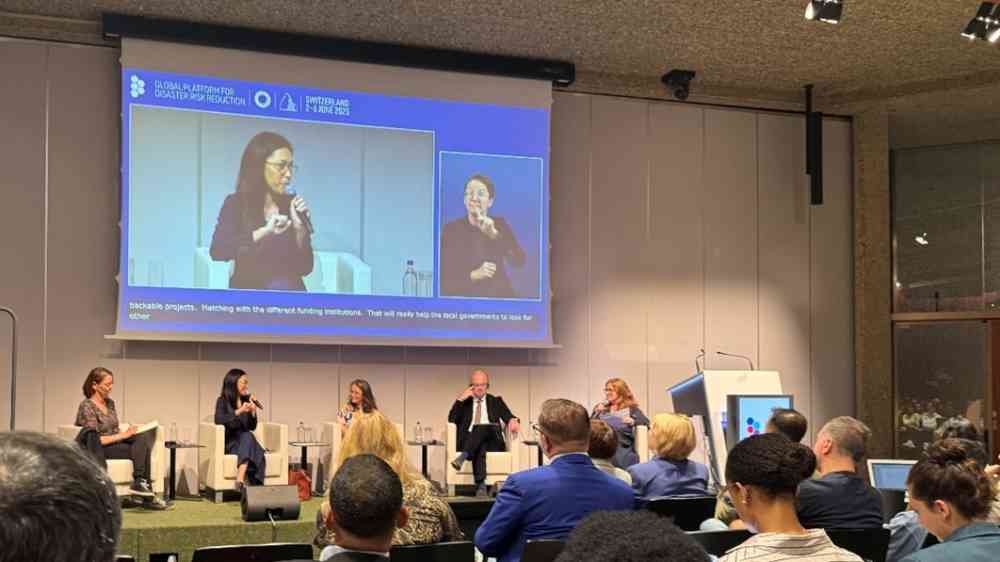
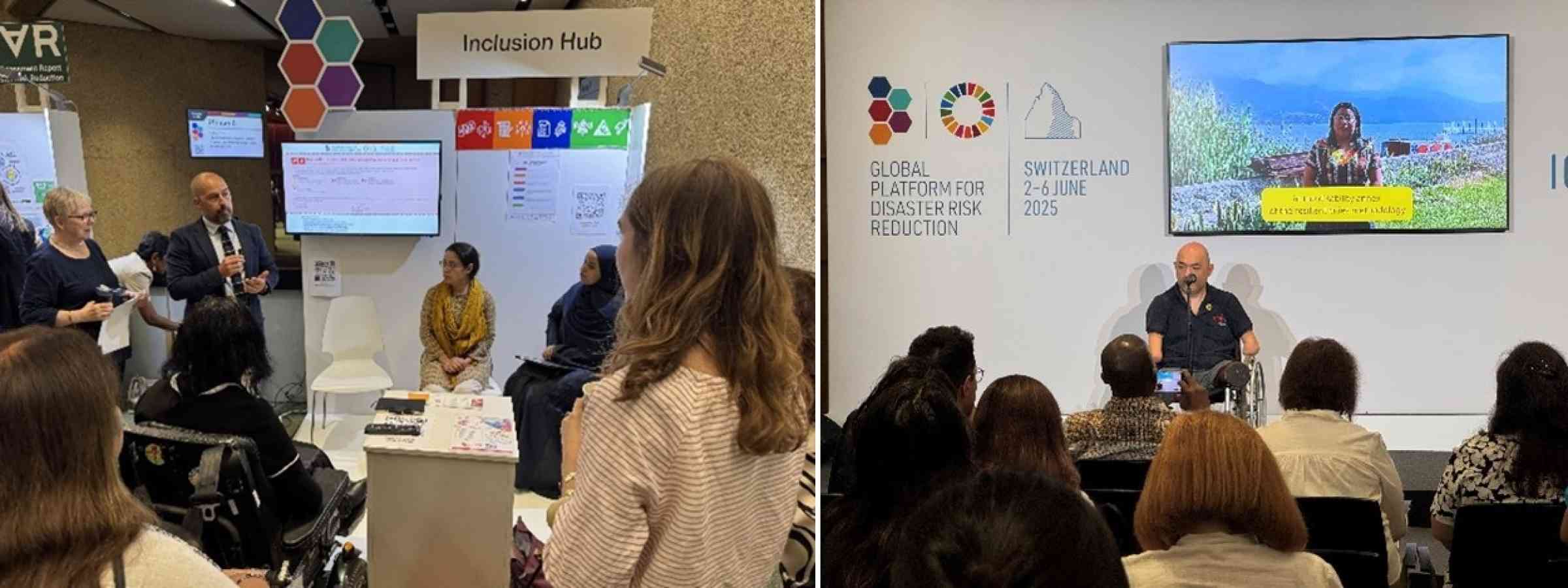
Right: Carlos Kaiser of ONG Inclusiva showcased the Disability Inclusion Scorecard Annex at the Ignite Stage.
Multiple sessions stressed the gap between global commitments and local action, urging governments and partners to move from planning to delivery. This message resonated strongly throughout discussions on urban resilience, where the emphasis was on “building forward better” with a focus on accessibility and inclusivity, especially for persons with disabilities and other at-risk groups.
The Geneva Call for Disaster Risk Reduction urged stakeholders to invest in decentralized DRR financing, empower local authorities, and facilitate peer-to-peer learning. It recognized that localized risk governance, supported by disaggregated data and community-driven planning, is foundational to inclusive and sustainable resilience.
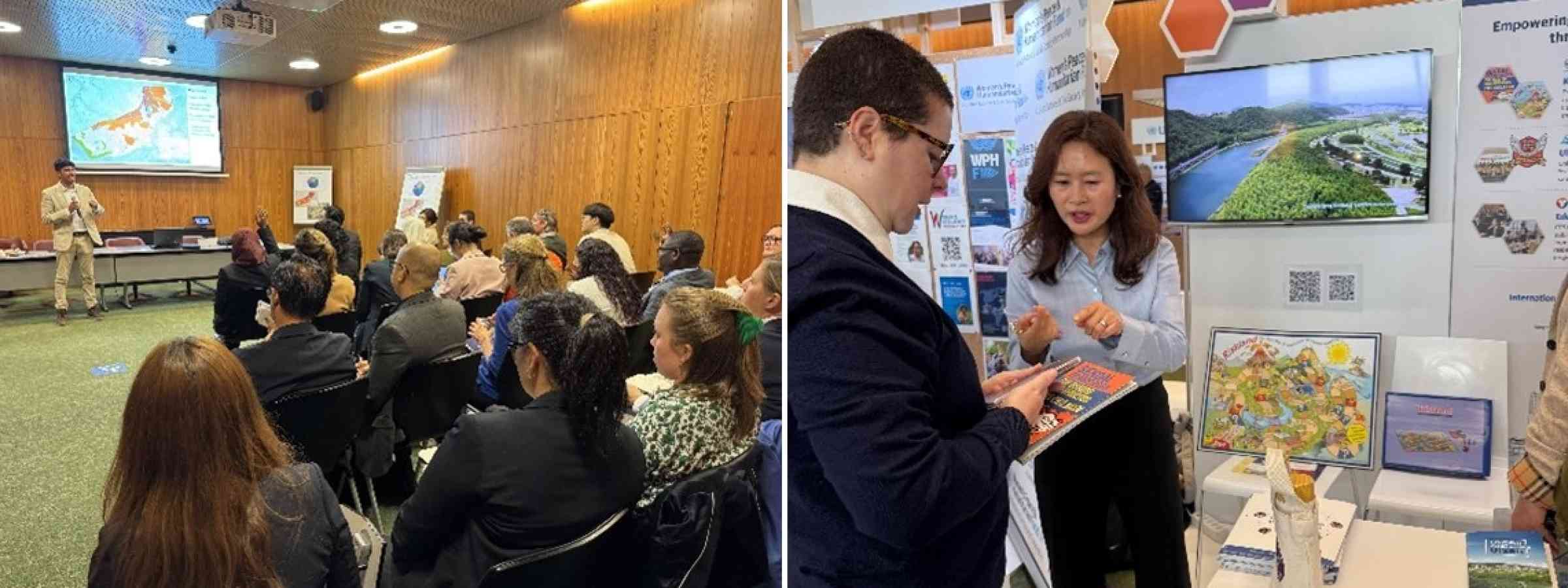
Right: Exhibition booth on “Empowering Youth Capacity of Resilience through DRR Education” by Incheon Metropolitan City and Ulsan Metropolitan City in collaboration with the Ministry of the Interior and Safety (MOIS) and the Citizens’ Coalition for Safety (CCS).
Beyond the formal sessions, GP2025 provided unprecedented networking opportunities for local governments, reinforcing the value of city-to-city collaboration. One of the week’s highlights was a special evening event hosted by the Global Cities Hub in collaboration with the Swiss government, bringing together MCR2030 city officials, national urban ministries, and urban resilience partners at Villa Rigot. The informal gathering allowed local leaders to forge partnerships, exchange ideas, and explore collaboration opportunities beyond borders.
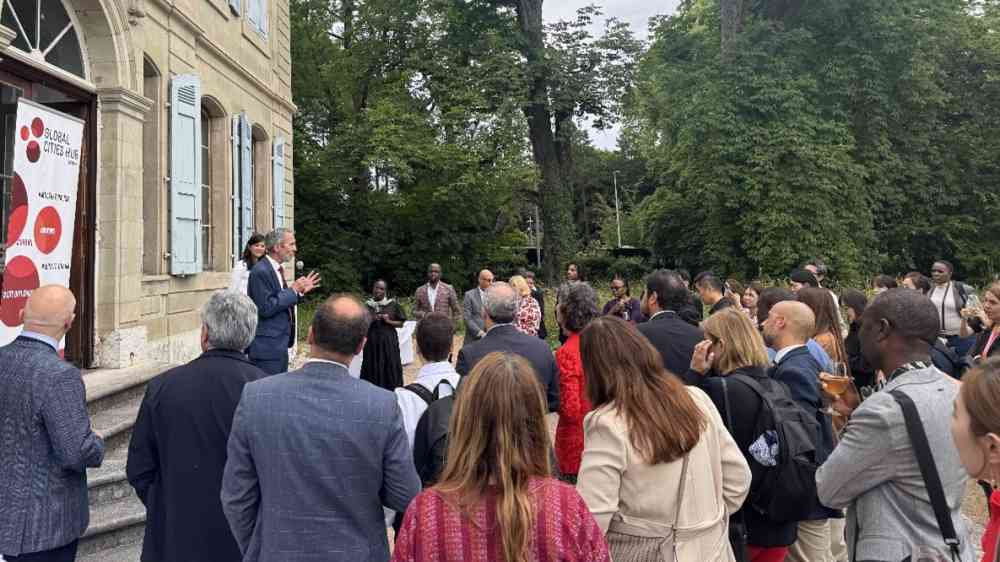
This focus on collaboration was echoed in the Co-Chairs’ Summary, which called for stronger transboundary cooperation, South-South partnerships, and city-to-city collaboration to tackle shared risks and leverage efficiencies.
“International and regional cooperation needs to be enhanced to address transboundary and emerging risks,” the summary stated, highlighting extreme heat, glacial lake outburst floods, and sea-level rise among the growing threats requiring local-global alignment.
With only five years left to meet the targets of the Sendai Framework, GP2025 reaffirmed that local action is central to risk reduction. Empowering local governments, financing grassroots initiatives, and ensuring inclusive participation are no longer optional—they are imperative.
As the global community moves forward, cities and local authorities will remain on the front lines, not just of risk, but of resilience.
"The innovative work is happening at local levels. We need to capture and elevate these initiatives – not just to circulate in reports, but to give legitimacy, voice, and funding so these actions can be scaled. The future of disaster risk reduction is not just national. It’s in cities, towns, and villages. If we don’t reduce risk at the local level, we won’t succeed. Local actors are already taking action – they are not waiting for the UN or national governments. We must scale this work"
- a message from Kamal Kishore, Special Representative of the United Nations Secretary-General for Disaster Risk Reduction