
In Colombia, resilience is multiplying from the ground up
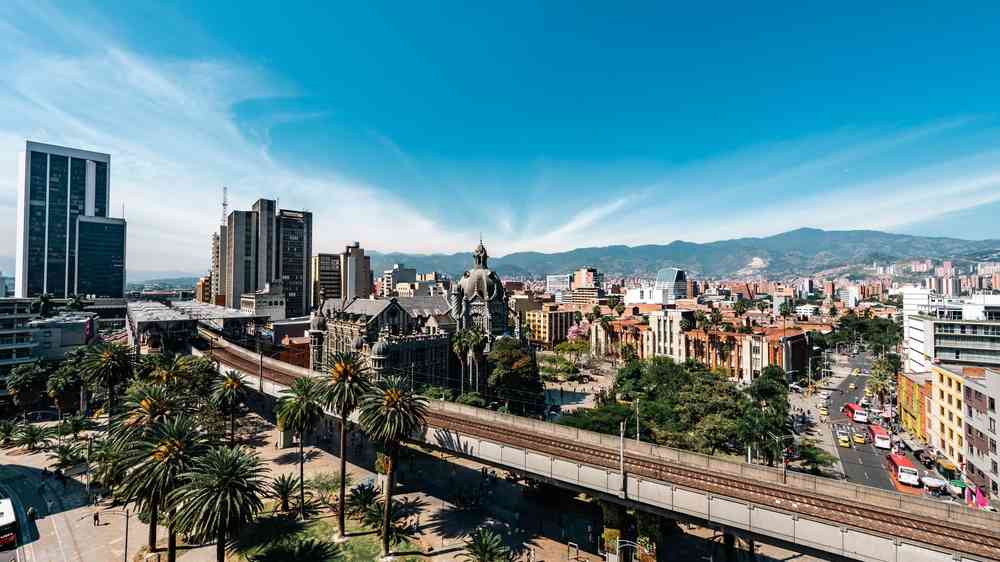
In Medellín's Alejandro Echavarría neighbourhood, the early warning system began as a community project. Residents themselves requested the equipment, they look after it, and they organize their own drills, with the backing of public and scientific institutions and civil society organizations. That mix of local initiative and institutional support helps explain how the Making Cities Resilient 2030 (MCR2030) initiative has grown in Colombia, where it now brings together 207 municipalities and five Resilience Hubs.
Much of that growth comes down to the way the initiative found its place within the country's institutions. Law 1523 of 2012 makes mayors directly responsible for disaster risk management in their municipalities and requires them to have a municipal disaster risk management plan. Colombia's National Unit for Disaster Risk Management (UNGRD, by its Spanish acronym) launched MCR2030 in the country with the support of the United Nations Office for Disaster Risk Reduction (UNDRR). Since then, the initiative has become part of that effort, helping to strengthen these plans through tools adapted to the local context.
Along the way, Colombia designed a methodological guide and two diagnostic tools. Forty municipalities have already strengthened their plans, another 150 are making progress, and more than 500 people have taken part in training. Coordination runs through a national technical working group that brings together UNGRD, supporting organizations, and the Resilience Hubs. Colombia also takes part in the MCR2030 Regional Coordinating Committee for the Americas and the Caribbean, where it shares its experience with other countries.
Bogotá, Medellín, Cali, Dosquebradas, and Manizales, Colombia's five Resilience Hubs, have committed to supporting other municipalities on their own journey. Each city brings its own experience. Manizales, for example, is a benchmark for its risk mitigation works and its financial protection strategy. Bogotá uses artificial intelligence to identify the most vulnerable homes. Medellín is investing in solutions such as Parque Primavera Norte, designed to absorb rainfall, and together with Recife (Brazil) carried out the first exchange between hubs in the Americas and the Caribbean. Dosquebradas, a mid-sized city, shows that a city does not need to be a major capital to become a Resilience Hub.
This kind of peer exchange has become standard practice. Colombia's Resilience Hubs have met in national forums, such as the first National Platform for Disaster Risk Management last May, and have opened their doors to cities from other countries. That was the case at the recent International Meeting of Resilience Hubs, convened by the Mayor's Office of Medellín. There, Kamal Kishore, Special Representative of the Secretary-General for Disaster Risk Reduction and Head of UNDRR, saw several of these experiences up close. "In Medellín, I saw first-hand the catalytic role that MCR2030 can play," he said.
Challenges remain, and scale is one of them. Medellín's early warning system currently reaches 80 communities, around 50,000 people. In Cali, another of the hubs, the challenge is recovery from the 10 August earthquake. National, departmental, and local authorities are working to rebuild with housing at the centre and without recreating risk, and what the city learns along the way could benefit other municipalities exposed to earthquakes.
As in the Alejandro Echavarría neighbourhood, MCR2030's progress in Colombia rests on those who have made it part of their everyday work. That includes UNGRD, the mayors' offices that build it into their planning, and the cities committed to sharing what they have learned and put into practice over time. UNDRR continues to support this journey, which confirms that resilience is built from the ground up and through networks.