
Cities and regions call for inclusive, whole-of-society disaster preparedness at European Week of Regions and Cities 2026
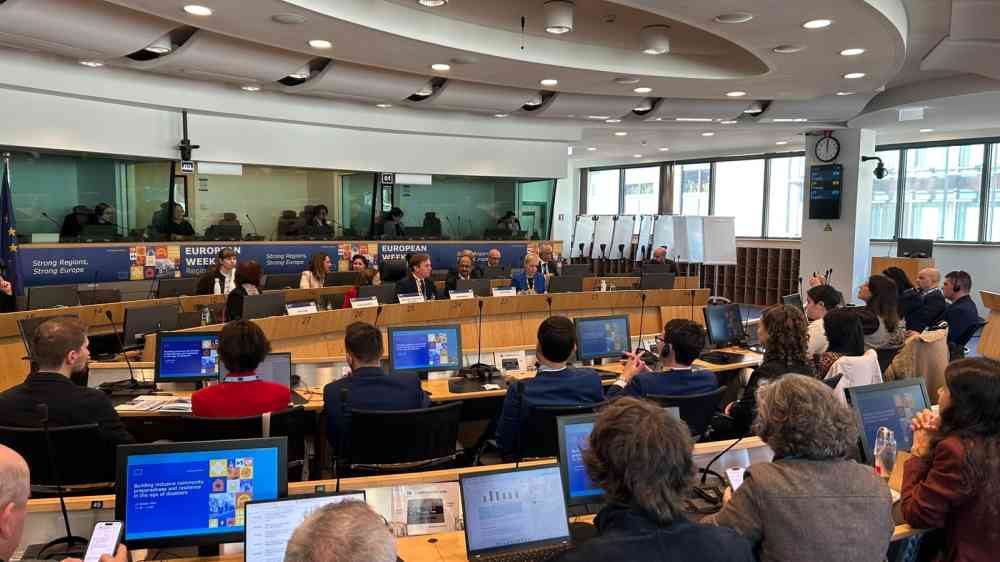
Brussels, 13 October 2025 – At the 24th edition of the European Week of Regions and Cities (EWRC), the European Committee of the Regions (CoR) and the United Nations Office for Disaster Risk Reduction (UNDRR) co-hosted a political debate on “Building Inclusive Community Preparedness and Resilience in the Age of Disasters.”
The session explored how local and regional authorities can build more inclusive, resilient communities through a whole-of-society approach to disaster preparedness, bringing together political leaders, European policymakers and international partners to discuss how resilient housing, early warning systems, public awareness and crisis communication can reach everyone — particularly children, persons with disabilities, older people and those most exposed to misinformation. Speakers included Ms. María Isabel Urrutia de los Mozos, Regional Minister for the Presidency, Justice, Security and Administrative Simplification of the Government of Cantabria and CoR rapporteur on the European Preparedness Union Strategy; Mr. Gregory Allione, Member of the European Parliament, who joined via video message; and Ms. Elif Ayhan, Lead Disaster Risk Management Specialist for the Europe and Central Asia Region at the World Bank.
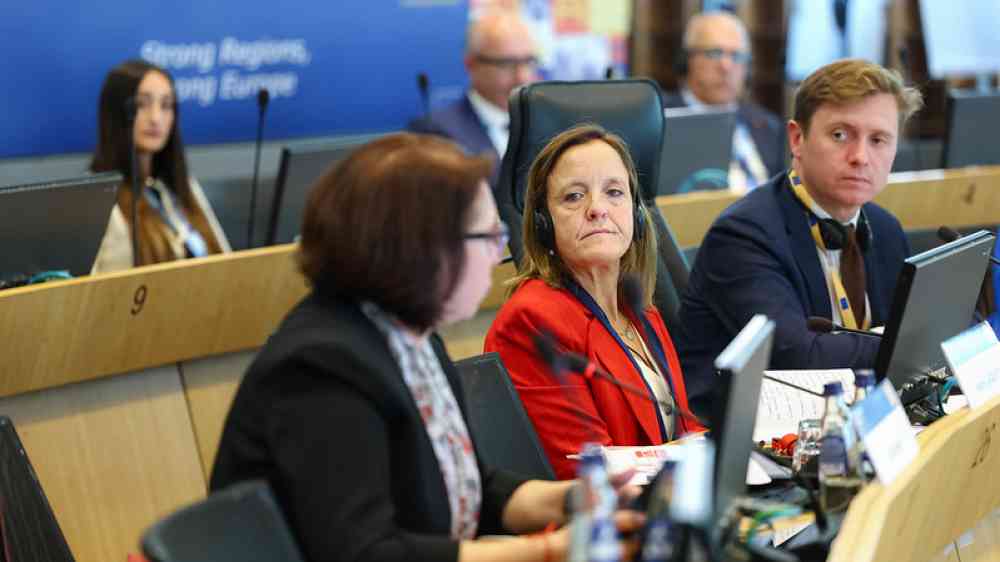
Moderated by Mr. Andrew Bower, Programme Manager at UNDRR’s Regional Office for Europe and Central Asia, the debate took place a day ahead of the International Day for Disaster Risk Reduction (IDDRR), whose 2026 theme, “Resilience Starts at Home,” echoed the session’s call for community-centered preparedness. Opening the session, Mr. Kamal Kishore, Special Representative of the UN Secretary-General for Disaster Risk Reduction and Head of UNDRR, set out four priorities for strengthening local resilience across Europe.
“Political blocs do not experience disasters, nor do entire countries. Disasters are felt at the city, town and village levels. These communities are on the front lines of hazards and are often the first to recognize emerging risks. But they often lack the capacity and resources to scale up their solutions,” said Mr. Kishore. “If we want strong regions, then they must be resilient regions. And if we want a strong Europe, resilience must be an integral part of the cohesion agenda.”
He pointed to the Making Cities Resilient 2030 initiative, which now counts nearly 250 cities across Europe and Central Asia — representing a combined population of 76 million people — and highlighted Barcelona’s work establishing a resilience ecosystem for small and medium-sized enterprises as an example of community-centered preparedness in practice.
The panel discussion brought together dynamic perspectives from diverse speakers. Speaking as a regional minister and CoR rapporteur on the European Preparedness Union Strategy, Ms. Urrutia de los Mozos stressed the role of public awareness in protecting communities:
“In prevention, it is essential to raise public awareness of the risks in their surroundings. The best protection is the one we can provide for ourselves. It is about educating to raise awareness, raising awareness to prevent, and preventing to know how to act,” said Ms. Urrutia de los Mozos.
Mr. Allione, who was unable to attend in person and addressed the session through a video message, spoke both as a Member of the European Parliament and as a firefighter of over 30 years.
“I know what it means to receive an alert at 3 in the morning. I know what it means, as a local elected official, to look your citizens in the eye after a disaster and ask yourself: did we do enough to prepare them? And the honest answer, too often, is: no, we did not,” said Mr. Allione, citing this summer’s wildfires in Gironde, France, where Ukrainian firefighters crossed Europe to help local responders. “Resilience is not a destination. It is a daily choice. And it is a choice we must make together.”
He called for EU funding instruments that are “fast, flexible and accessible,” so that medium-sized cities, rural communities and cross-border regions “can access them without hiring a team of consultants,” and underscored the importance of bringing local and regional authorities into EU legislative design from the outset.
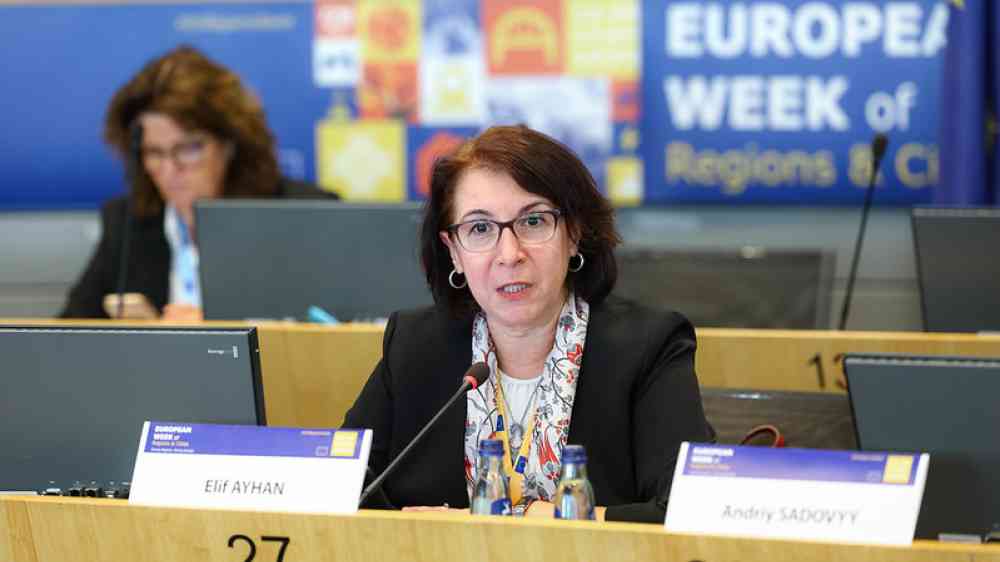
Representing the World Bank, Ms. Ayhan spoke on how investment in resilient housing, early warning systems and community preparedness can be better connected to reduce disaster impacts and protect the most vulnerable.
“Cities and regions are where resilience becomes real. National policies provide the framework, but preparedness is ultimately delivered locally, through safer homes and infrastructure, functioning essential services, effective early warning systems and communities empowered to act. We need to invest before disaster strikes and ensure that no one is left behind. Resilience is not only about responding better when crises happen; it is about making better development decisions today to protect lives, livelihoods and development gains tomorrow.” She underlined.
Participants engaged actively in the discussion, reflecting on how inclusive preparedness can reach people who face barriers in accessing timely and reliable information, and on the practical steps regions can take to strengthen cooperation between public authorities, communities and other stakeholders before, during and after disasters.
This session showed that building resilient communities is not only a matter of infrastructure and early warning systems, but of trust, inclusion and shared responsibility across political, institutional and local actors. Investing in preparedness today means ensuring no one is left behind tomorrow.
About the European Week of Regions and Cities (EWRC)
The European Week of Regions and Cities (EWRC) is the largest annual event in Brussels dedicated to regional and urban development. Organized by the European Commission’s Directorate-General for Regional and Urban Policy and the European Committee of the Regions, EWRC brings together policymakers, practitioners, and stakeholders to exchange experiences and shape the future of Europe’s regions and cities.